Monday, March 10, 2008

The Six Pack

The fitness goal of each individual is different. For a 19 year old the goal would be huge muscles, for a bodybuilder the goal would be quality muscle and for women thin waist line and sexy looks. But there is one aspect of fitness which is common to everyone. The six pack. No matter what your goal is but you want a six pack abdominals. The moment one speaks about a perfect body, the first thing that comes into the mind is the Six pack. So I thought of bringing all the important aspects of developing the six pack under one article.

Why is it so tough to get the six pack?

Most people are going in a completely wrong way, or they are going in the right way, but the approach is incomplete. They think that abs exercise alone will bring six pack. Abs exercises do develop ab muscles and strengthen them but do not burn fat from abs alone. With abs workout you could achieve great abs, but it won’t be visible with a layer of fat over the abs. You may never see them with a layer of fat over them.

The reason is fats are subcutaneous – Fats are stored underneath the skin and right above the muscles covering up your definition. In order to make your six pack visible, exercise alone can not help you. So here are some of the factors you must consider while working your way towards the six pack abs.

Calories and diet:

In order to make your six pack visible you need to reduce your fats under skin. So the first thing that should be done is “Go on a negative calorie diet”. If you don’t consume lesser calories than what you expend, you may never loose fat under your skin. So first go on a negative calorie diet with a balanced nutrition. Negative calorie does not mean starvation.

Once your body gets clear signals that you are starving, your metabolic rates will decrease. The major fat burning hormones like thyroid and leptin will also decrease and cause the catastrophe in your diet. This explains why loosing the last 5 pounds of body fat is so tough. Its because by that time you would have entered into the starvation mode.

So simply don’t starve. Plan your diet properly. Reduce your calories about 5-15% lesser than your requirements. Plan at least one high carb day a week to boost up your metabolism and to avoid your body from going into the starvation mode.

Body fat reduction and workouts:

As said earlier, if you carry a lot of fats under your skin then it is tough to see your abs. One must understand that spot reduction of fat is absolutely impossible. When you do your abs training, Mother Nature decides from where to pull out the fats. For most of the people, abdominals are the last place from where the fats are pulled out. So in order to develop the six pack, one must pull out all the fats under the skin.

As I said earlier, doing abs workout alone wont work. Similarly doing cardio alone will also not work. A proper fat loss program or a program towards six pack is incomplete without any of the three factors – Diet, Cardio & Weight training.

Cardio – Increases your heart rate to burn fats all over your body

Weight training – Will increase the lean muscle mass all over your body and increase your metabolism and give that balanced look.

Abs exercise – Targets the ab muscles and develops the muscle in the abdominal area.

Abdominal muscle:

Ab muscles are also yet another muscle group in the body. They also need time to recover and to grow. So don’t train them daily. Train them like any other muscle so that you provide nutrition and rest for growth. Training them day in and day out on a daily basis can actually be negative for you. Training them daily can actually shrink your ab muscles, and make them look very skinny and make your abs look very weak.

Genetics:

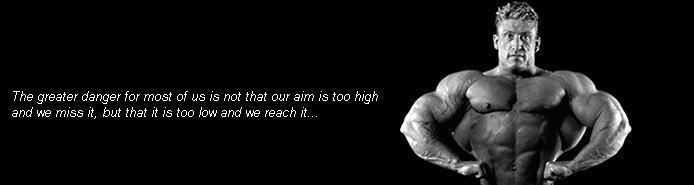
Dorian Yates has a different abs look and Arnold has an entirely different look on the abs, why? Arnold had one of the best arms in the world, but Boyer Coe had a split on top of his biceps which Arnold did not have, Why?

It is because of genetics. The muscle shape and arrangements are entirely dependent on your genetics, so try to aim for achieving your genetic potential on the six pack rather than imagining your abs as Dorian or Arnold. Who knows, even you can be an inspirational bodybuilder tomorrow decorating the gym walls and inspiring young upcoming bodybuilders with your strong abs pose.

All the best

Sunday, March 2, 2008

Maximum muscle gain

When it comes to building muscle, there are so many conflicting information that you might feel confused on where to start and how to start. So here in an article in which, I am going to put in place some of the most important strategies to consider while trying to gain muscle.

Positive calorie diet and frequent meals
The main place where most of the bodybuilders fail miserably is on diet. Working out in the gym is only half the equation. We break down the muscle tissue in the gym. If we do not provide it with proper nutrition at the right time, it will never grow. So in order to make the body to stay in anabolic state and to provide the muscles with nutrition consistently one must consume anywhere between 5-8 meals a day. The body must be provided with building materials every 2-3 hours during the day.

If we do not provide the body with extra calories, our body will never gain weight. So if you are planning to gain muscle and gain it fast, you have to consume a minimum of 10% more calories than what you require. This does not mean that you should resort to junk foods. You have to consume around one third of your calories from protein and two third from your complex carbohydrates and a very small quantity of fats. I ask to keep the fats low because fats are hidden in most of the food sources.

Protein - The base of muscle gain
Of the 3 major nutrients (protein, carbohydrates and fats) protein is, without a doubt the most important nutrient for those who are looking to gain muscle size and strength. Protein is found in each and every cell of the body and its main role is to build and repair body tissue. Without sufficient protein intake, it will be impossible for your body to synthesize a significant amount of muscle mass. Imagine your body as a building under construction. Your workouts are workers and the main building material to build muscle is protein (like bricks for the building). If the workers don’t have bricks they will stop working. Similarly your workouts will go down the drain if you do not provide your body with adequate protein. So consume at least 1g of protein per pound of bodyweight when you want to improve your muscle mass and gain weight.

Focus on compound movements
If you want to make solid gains in muscle size and strength, you absolutely need to train with free weights and focus on basics. That is focus on the compound exercises. A compound exercise is any lift that stimulates more than one muscle group at a time. Examples of compound exercises are squat, dead lift, bench press, chin up, barbell row, overhead press, dip and lunge. Compound exercises will allow you to handle more weights and will stimulate more muscles fiber per exercise.

The training intensity
The major factor separating those with moderate gains and those with maximal gains is the training intensity. In order to take your muscle fibers to their maximal potential you have to take them to the limit on each and every workout. In simple words take them to their failure point.
The point at which no further repetitions can be completed using proper form is called as temporary muscle failure.
Moderate intensity leads to moderate gains and maximal intensity leads to maximal gains. It is as simple as that.

Avoid overtraining
The number one enemy for maximal muscle gains is overtraining. Most of the youngsters are taken away by the notation “more is better”. But one has to understand the mechanism of growth. Muscle never grows at the gym; it grows after the workout when provided with adequate rest and nutrients for reconstruction. If more is better was the correct approach, then training 24/7 would have been a great idea and pros would have never left the gym. But it is not the case. Even steroid freaks limit their workouts to an hour or two. If you spend too much time in the gym, you will actually take yourself farther away from your goals rather than closer to them. Remember, recovery is absolutely vital for muscle growth. If you don't provide your body with the proper recovery time in between workouts, your muscles will never have a chance to grow.


Track your progress and be consistent
Building muscle was never an easy task. If it had been as some writers mention in their articles, everyone around would have been an Arnold and a Mentzer. But it is not the case. Everyone on the planet is unique and each one of us has different genetics. So in order to achieve your goals you have to check your progress periodically. Even one rep increase using the same weights on the next workout or lifting some extra weights on the next workout will be a very big gain. Tracking your progress will motivate you better than any personal trainer or even better than psychologists. So never forget to track your goals in terms of weights, reps, size and weight. Noting down the lifts and reps each workout is a good practice. Taking measurements and weight every week is a very good practice too.
Be consistent in each and every workout and try to take your working sets to failure and even beyond. As I said earlier, maximal intensity leads to maximal gains.

All the best!!!

Tuesday, February 26, 2008

Weight training for women!!!

Now you must be scratching your head. Women in weight training? !!!

But for your surprise they do it and they do it well. Many women are reluctant to get into weight training or if they do, are reluctant to progress and lift heavier weights for fear of looking like a female bodybuilder!.

The female bodybuilder!!

Do your weight training and you will look better than ever!

You cant really get big muscles! It is really hard for women to build huge muscle. Women don’t possess the right hormones for it. Then how are the female bodybuilders so huge? They are steroid freaks. If you stay away from roids and male hormones, you’ll be absolutely fine.

Considering the fact that weight training do build muscle, you won’t loose your feminine looks, but you will look more shapely and firm. A little bit muscle on your shoulders and gluteus will make your waist look smaller and your waist will appear small.

Oh then my weight will go up!! Don’t worry. Having more muscle will increase the metabolic rate and you will burn more calories. Muscles consume more calories for just their being in the body. If you have a pound of fat in your body, to stay it does nothing, but if you have an extra pound of muscle, it burns a lot of calories throughout the day. This makes your fat burning goals easier. And moreover having less muscle and more fats, “muscle-to-fat” ratio declines as we get older. This in turn lowers the metabolic rate to increase fat. Weight training can put an end to this or work in the reverse. So you can look younger in your old age. (You will look relatively younger compared to the women of your age group)

I have seen many women progress in their fat loss and fitness goals better with the weights, cardio and proper diet, than the women resorting to cardio and diet alone.

Advantages listed to motivate you

  • Weight training increases bone density in women.
  • Older women in postmenopausal period are easily prone to osteoporosis and weight training can really help them fight its onset.
  • It strengthens the muscles, making the cardio easier.
  • At an older age women will feel more independent and functional if they possess strength in their body.

Enjoy your workouts

If you don’t like the idea of traditional exercises like squat and deadlift, try your hands on the machines. Nowadays we have a hell a lot of machines out there in the gym which can really make you feel as if you are inside a robot operating it Or get into bodyweight training or use more unconventional resistance like sandbags, medicine balls etc.

Training with a friend also makes the whole thing more fun. The bottom line is that for continuing health, strength and beauty, weight training is incredibly effective and it makes you feel great.

All the best!

Saturday, February 23, 2008

The Rep Range

One of the most controversial and misunderstood concepts in bodybuilding is the rep range. Every where you look, some one is advocating a different rep range.

The popular thinking has boiled it down to the following generalizations:
Strength - 1 - 5 repetitions per set
Muscle Mass - 6 - 10 repetitions per set
Muscle Mass for slow twitch fibers - 12 - 20 or more reps per set for body parts like thighs and calves.

Does this sound interesting?
Yeah! It sure does. But do muscles count reps??

First, muscles don't count reps, so these numbers could be completely different for someone who takes 10 seconds to complete one rep, compared to someone who takes 2 seconds for each rep.

A good example of this misapplication is recommended by the late Mike Mentzer. He usually suggested 6-10 rep range. So everyone following Mike would say that using heavy weights is heavy duty. But the fact was different. Mike advocated a rep speed that took about 10 seconds to complete each rep. For 6 reps that amounts to 60 seconds. But the way most people do it would last only for about 15 seconds. This shows a humongous difference between the weights used and the results produced.

This is a very important concept that got lost over years. When studies were done that showed 8 – 12 repetitions was the optimal number of reps in a set for most people, the accepted cadence was 2 seconds for the raising (positive) part of the rep and 4 seconds (negative) for the lowering of the weight.

Each repetition took 6 seconds to complete for a total rep time of 48 - 72 seconds for the entire set. This is a vital fact of exercise physiology to understand if you wish to optimize your progress.

So muscles don’t count reps! All they count is TUT or TUL (TUT- time under tension & TUL- time under load).

So this is where the 8-12 rep range was born. But slowly, fitness professionals started advocating the rep range and left the TUT in mid air. The very concept of TUT just did not become famous but the rep range did.

Counting seconds while you count the rep is a very tough job. I had this problem personally while I started using slow reps in my regiment. So here is a easy work around for you. Count the reps alone. Do not cheat or use momentum, do the positive slowly and only with the muscle group involved, and do the negative in a relatively slow manner. This will ensure that your rep lasts at least for 5 seconds. When you gain experience, you might be able to go on even slower.

Fast twitch fibers respond best with a tension time of approximately 40 – 50 seconds. Slow twitch (more endurance oriented) respond best with a tension time of 90 - 120 seconds, while a mixture of the two does well with a time under load of approximately 50 - 90 seconds.

The TUT/reps per set that is appropriate for you is also determined by your muscle fiber make up and your neuromuscular efficiency.( neuromuscular efficiency is the ability to contract a large number of fibers at one time). So the faster the muscle fatigues, the higher its neuromuscular efficiency and greater the fast twitch fiber content. The slower the muscle fatigues, the lower its neuromuscular efficiency and the greater the number of slow twitch fibers.

Knowing your muscle fiber composition is very vital when you are planning and putting into place all the other factors. Rather than approaching your workout with rep range in mind, approach your workouts with the time under tension in mind.

Give it a try for just four weeks. You will surely know the difference.

All the best!!

Wednesday, February 20, 2008

Fat loss diet for all

The first and foremost thing that I would say to those looking forward to lose fat is, “You cannot lose fat if you do not keep your calorie intake in negative” That is, eat a little bit lesser than what you expend on the day. So without wasting your time let me go straight into the diet plan.

Eat 6 Meals a day:

To keep the metabolism of your body high, you have to eat frequent meals. Rather than eating three large meals, 6 evenly spaced small meals can be utilized better by your body. You will get an uninterrupted supply of protein to maintain your hard earned muscle. By eating small frequent meals, you will give the body the necessary source of energy in regular basis. So your body will be in a good balanced state and so it won’t produce the chemical enzymes to convert food into fat storage. But if you eat infrequent meals, the body will go into a panic mode and will start storing fats under your skin in order to withstand long time without food.

Planning to make this 7 or 8 meals is also a wise decision.

The calorie game:

The most important factor in determining how much weight you gain or how much weight you lose is the calorie count of the food that you consume daily. As I said earlier, you have to be in a negative calorie balance in order to lose weight and fats.

You must remember one more thing. Human body has the best adapting mechanism. So if you keep your calorie balance negative always, the results will slow down and your body will simply adapt to the situation and will stop you from loosing weight and fat.

In order to over smart the body’s adaptation, we must learn to cheat. What???

Ya. Cheat in the right sense. Plan for two continuous cheat meals every three or four days. After three or four days of continuous negative calories, your body might think of shifting gear and it will try to adapt to the situation. But if you place a high calorie meal at this point, you will no longer be negative calorie balance. Instead you will be in a positive calorie balance. So your body won’t get adapted to the situation and will continue to support you in loosing fat.

There is one more advantage of cheat meal. It helps to pack on some more lean muscle onto your body. In order to maintain the added muscle tissue, your body has to spend some more calories that you eat. So it increases your fat burning capacity.

If you are obese by nature then space the cheat meals 5-6 days apart.

The macronutrient ratio:

Consume 60% carbohydrates, 30% proteins and 10% fats.

Is this correct ? – “If you consume 100 grams of food, then it should be 60 g carbs, 30g protein and 10 g fats”…

That’s absolutely wrong. When I say it in ratio it refers to the percentage of calories coming from each source. So the right way to consider is, - “ If I consume 100 calories, then 60 calories should be from carbs, 30 calories should be from protein and 10 calories should be from fats”.

Why on the basis of calories?

It is because,1 g protein = 4 calories, 1 g of carbohydrate = 4 calories and 1g of fat= 9 calories.

So fats constitute more than twice the amount of calories from protein or carbohydrates.

Time your carbs:

You can consume more carbs during your breakfast, before your workouts and even after your workouts. But it should be lesser during the night. Why?

As we all know carbohydrates are source of energy. If we consume carbs and go to sleep, then the energy consumed could not be used up by the body. So in turn the body will try to convert it into fats. So we must consume more carbs before high physical activity hours of the day and try to keep it very low during the low activity hours of the day and in night.

What carbohydrates?

Try to consume fibrous and starchy carbohydrates. And try to stay away from sugars, as they can increase your insulin levels and can spoil your diet. But consuming sugar carbohydrates immediately after training can help you replenish the lost glycogen stores in your muscle.

Never starve:

When ever you go into a negative calorie balance, take care that you do not reduce your calories drastically. Reducing the calorie levels by 10-15% is safe.

A fat loss enthusiast might try to reduce his calories by 50%. This should decrease his weight faster than the earlier…. But it will never result that way.

First of all, when he tries to drastically cut down his calories, his body will go into the panic mode. So now its concern would be to protect itself from the scarcity of food. To hold one kg of fat under your skin, you need not expend a considerable amount of calories, but if your hold 1 kg of muscle, you need much more calories than fats. So the body will consider the situation and start giving you energy from the hard earned muscle.

So after one week of this diet, he might have lost more weight than the other people on a safe diet. But from the second week the results will go down and will eventually stop.

If we analyze his body composition, he would not have lost much fat and would have lost much more muscle. So if we consider the proportions of muscle and fat, muscle would be lesser than before and his fat would be nearly the same or even more. So his net fat % would be more.

Why did the weight loss come to a halt in this person?

As I said earlier, the body can adapt very fast. Earlier it would have been on 3000 calories. So when the subject cut it down to 1500 calories, the human body adapted itself to 1500 calories by using up some muscle tissue as energy source and by retaining fat under the skin for future scarcity situation. So after this point if the subject tries to drop more calories the same drastic way, the body will adapt.

And at a point he would get totally hopeless on fat loss and might start to eat normally again. But now his body has adapted to very less calories. So even 2000 calories would be excess for it and it will deposit it as fat under your skin. This is the most common mistake that people do and complain that their diet is not working.

So let us not complain about diet and let us play the dieting game with sense.

These are the building blocks of constructing your fat loss diet. Construct your fat loss diet sensibly and achieve your desired goals.

All the best!!!

Google Search

Google